MAKE SURE YOU PUT CUSTOMERSERVICE@IDENTITYNETWORK.NET INTO YOUR ADDRESSES IN YOUR EMAIL SERVER. IF NOT, YOUR EMAILS FROM US WILL GO TO YOUR SPAM FOLDER.



Could good judgment become the most valuable commodity of the coming decade? I've recently commented on the growing value of critical thinking and good judgment. The more I look at what's happening around us, the more convinced I become that we're entering a season where these qualities will distinguish leaders from those who simply follow the crowd. Recent IBM research reinforces that. In a survey of chief human resources officers, 57% identified critical thinking as one of the most important workforce capabilities, while 48% identified human judgment. Think about that for a moment. In a world increasingly driven by technology, automation, and artificial intelligence, organizations are recognizing the value of something technology alone can't provide—the ability to think clearly, discern what matters, and exercise sound judgment.

There's a version of sonship theology that sounds airtight, and it usually starts with a genuinely good insight. Someone reads Ephesians 2:6 closely — "God raised us up with Christ and seated us with Him" — and notices something real: the subject of that sentence is God. Not me. God raised. God seated. I'm the object, not the actor. Whatever that seat is, I didn't climb into it, and I don't have to climb into it again tomorrow. It's not a place I visit. It's where I already am. Followed further, this reading becomes something almost restful. Prayer stops being a strategy meeting and becomes communion.

What sweet memories I have of Thanksgivings gone by! The crackle of a fire in the fireplace. My mother's white linen tablecloth spread across the dining room table. The smell of a turkey roasting in the oven. Pumpkin pies cooling on the countertop. My grandmother's delicious cranberry recipe. Family gathered from near and far, filling the house with laughter, stories, and memories. And, of course, there are those we miss deeply. Those who are no longer able to gather around the table with us. Thanksgiving has always been one of my favorite holidays. It is a beautiful reminder of how much we have been given and how appropriate it is to respond with gratitude. Thankfulness is the only response.

It was only two years after I moved into my first home that I decided I could no longer stand the vinyl flooring in the entrances, kitchen and bathrooms. I wanted it all ripped out and replaced with tile. But I had two problems. First, I was too cheap to hire a professional to do the work. Second, I am not much of a handyman. That combination does not go together well. So when a far more experienced friend offered to help, I jumped at the opportunity to begin. We started by sharpening our skills in a small entryway. What we failed to consider is that home foundations are notoriously unlevel, and cutting tile to go around door frames is an art that is not developed over night. Suffice it to say that what should have taken an evening to complete took five days, and it was accompanied with backaches, blisters and blood!

Maintaining an attitude of gratitude is something we need to do on purpose. Most people would agree that we have a lot to be thankful for. After all, many of us live a lifestyle full of conveniences... We live in comfortable homes, wear nice clothes, and have reliable transportation. We have no shortage of clean water or healthy food. We have access to quality healthcare and education and basically live a good life with a lot of freedom, safety, and security. While it's easy to take these wonderful blessings for granted—and begin to focus on what we don't have—millions of people around the world live without the basic necessities of life.

So many people are caught up in having everything done instantaneously. The newest technology of AI has changed the world. AI could write a book in 5 seconds, paint a masterpiece without a brush, compose a song without an instrument, clone a voice without the person in the room, answer any questions in the world, even diagnose an illness without touching the patient. How is everything changing so fast? We've come to a generation of people addicted to instant. They want instant answers, instant images, and instant revelation, but revelation from the Holy Spirit doesn't come that way.
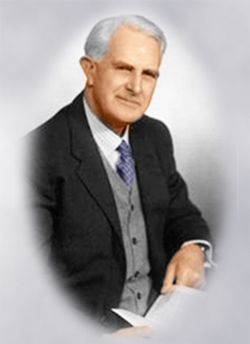
God, who has called you into fellowship with His Son Jesus Christ our Lord, is faithful. (1 Corinthians 1:9 NIV) This is an age of cheapness. Get it as cheaply and as quickly as you can, with just as little cost and tiresomeness. "Get it quickly: get it easily." That thought governs the whole world system. Everything is now aligned to getting it done easily and getting it done quickly. It is that way in your kitchen, your scurrying, your household affairs, and in every other realm. What is true in the secular has now become very largely true in the spiritual. The standards have been terribly lowered. Bigness has substituted greatness. Greatness, the true meaning of the word, is no longer considered. Oh, how we hear, "Big, oh yes, the bigger, then assuredly that is the most successful," but this is absolutely contrary to the Bible, to all gospel. It is like that.

There are four different kinds of faith, which are differentiated between form, function, and purpose. We will focus primarily upon the gift of the Spirit, the gift of supernatural faith. One way to get understanding is to define what something is and is not, what it does and does not do. Saving faith, natural faith, and the fruit of faith are different from the supernatural gift of faith. Natural faith comes from human experience. Saving faith comes from the human heart's desire for the Savior. The fruit of faith is the product of the reborn human spirit and develops like fruit on a tree. The gift of faith is a supernatural manifestation of the Holy Spirit.

As I've watched the ongoing conversations about prophecy, I've become increasingly convinced that in our effort to test and weigh prophetic words, we may be overlooking something foundational. What if we've started at the wrong place? If our primary question is whether a prophetic word is true or false, we may miss the most important factor in the entire equation. Before we evaluate the message, shouldn't we first consider the messenger? "So, every healthy tree bears good fruit, but the diseased tree bears bad fruit. A healthy tree cannot bear bad fruit, nor can a diseased tree bear good fruit" (Matthew 7:17). Accuracy alone is not enough.

Asking God questions is one of the most natural things we do as believers—yet so often the silence that follows leaves us frustrated and wondering why He isn't answering. You prayed, waited, asked again—and still heard only quiet. It's frustrating, even discouraging. I've been there more times than I can count. The good news? God isn't ignoring you. Most of the time, when we don't hear an answer, it's because something in how we're asking needs adjusting. Today I want to share three common reasons why God may not answer—and what you can do differently so you start hearing Him clearly.
This page does not exist.