


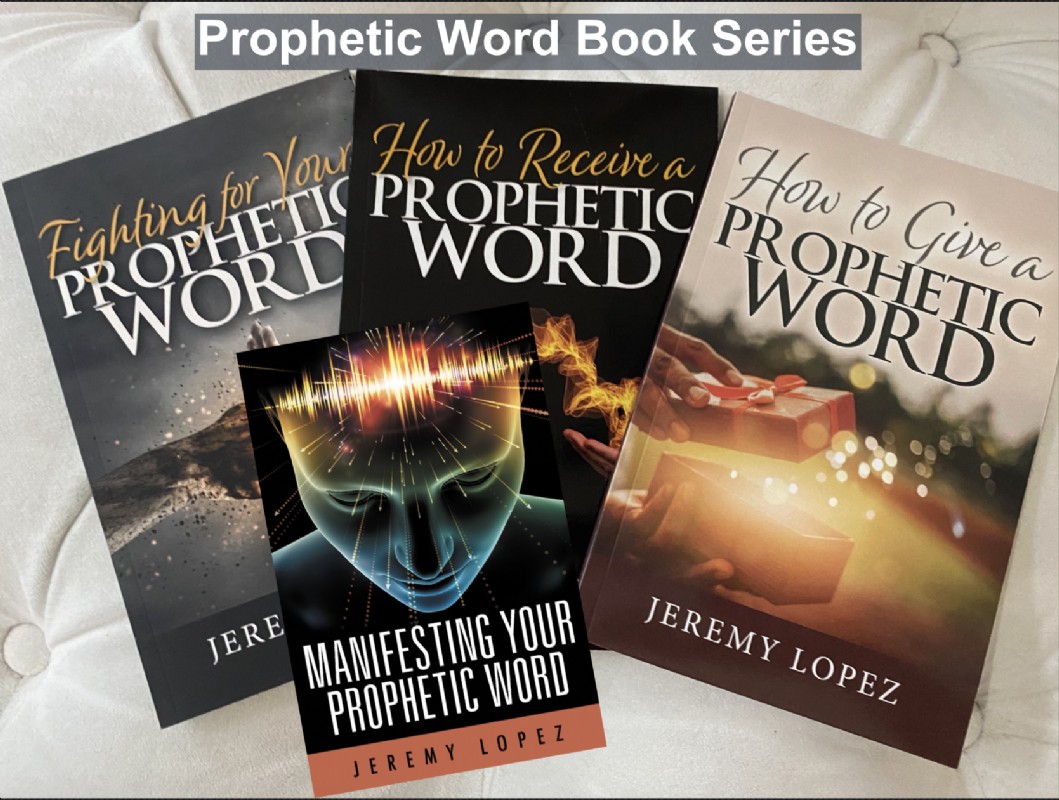
 Prophetic Word Book Series
4 Ebooks
By Jeremy Lopez
Price: $48.99
Have you ever sat in a church service, heard a powerful message, and walked away feeling like the truth was poured directly into your mind — but somehow, a week later, it had not quite reached your heart? You are not alone, and more importantly, Jesus understood this problem perfectly. His response was to stop giving information and start telling stories.
When the disciples noticed this, they were genuinely puzzled. They asked Him directly, 'Why do you speak to the people in parables?' His answer is one of the most revealing statements about communication and the Kingdom that exists in Scripture.
The Problem with Spoon-Feeding Truth
Jesus explained His method in Matthew 13, and His reasoning is worth sitting with slowly: "He replied, 'You've been given insight into God's kingdom. You know how it works. Not everybody has this gift, this insight; it hasn't been given to them... That's why I tell stories: to create readiness, to nudge the people toward receptive insight.'" Matthew 13:11–13 (The Message)
Notice what Jesus said. He told stories not to make things harder — but to create readiness. A heart that is not yet ready to receive a direct truth will resist it, argue with it, or intellectually agree while remaining unchanged. But a story? A story sneaks past the defenses and settles into the soul before the mind has time to debate it.
This is why the Kingdom of Heaven is like a mustard seed. Like a pearl of great price. Like a prodigal son and a waiting father. Jesus was not being vague — He was being surgical.
John the Baptist and Jesus: Two Different Languages
One of the most illuminating contrasts in the New Testament is between how John the Baptist communicated and how Jesus communicated. Both were anointed men. Both carried the Spirit. But they spoke in entirely different registers.
John was direct and straightforward. His message was clear, specific, and left no room for misinterpretation: 'Repent, for the kingdom of heaven is at hand.' When the Pharisees came and asked John if he was the Messiah, he gave a plain and immediate answer: 'No. I am not He.' John's language was what we might call indicative — it declared truth plainly, naming things precisely as they were.
Jesus operated differently. When the disciples asked Him who He was, He did not answer directly. He turned the question back: 'Who do they say that I am?' He waited while they answered from a carnal, natural understanding. Then He sharpened the question: 'But who do you say that I am?' When Peter finally answered correctly — 'You are the Christ, the Son of the living God' — Jesus replied that flesh and blood had not revealed this to Peter. It came from the Father.
Do you see the difference? John gave people the answer. Jesus led people to discover the answer for themselves — through Holy Spirit revelation.
"Flesh and blood has not revealed this to you, but my Father who is in heaven." Matthew 16:17 (ESV)
Revelation Is Best Caught, Not Taught
There is a world of difference between information and revelation. Information fills the mind. Revelation transforms the heart. A great teacher does not force-feed students but instead creates the conditions for discovery. Socrates understood this — his famous method was built entirely on questions, not answers.
Jesus, the greatest Teacher who ever lived, did the same thing. He crafted stories so that those with spiritually perceptive hearts could encounter God inside the narrative. 'He who has ears, let him hear,' He would say. The invitation was always to go deeper.
This is the genius at the heart of the prophetic story. Rather than declaring to someone, 'You are called to lead,' a prophetic story might tell of a shepherd who discovers he carries the voice of a king — and the recipient, in the discovering, receives not information but an owned revelation that changes them from the inside out.
I want to ask you a question this week, in the spirit of Jesus' own method: What story is God using in your life right now to reveal something about who He is? He may not be speaking through a sermon. He may be speaking through an unexpected kindness, a dream, a struggle that is shaping your character, or a movie that moved you in ways you cannot explain.
He who has ears, let him hear.
"I will open my mouth in parables; I will utter things hidden since the foundation of the world."Matthew 13:35 (ESV)

 Visitor Comments (0)