MAKE SURE YOU PUT CUSTOMERSERVICE@IDENTITYNETWORK.NET INTO YOUR ADDRESSES IN YOUR EMAIL SERVER. IF NOT, YOUR EMAILS FROM US WILL GO TO YOUR SPAM FOLDER.



"…be filled with the Spirit, speaking to one another in psalms and hymns and spiritual songs…" Ephesians 5:18-19 The car engine clicks off in the driveway, and the heavy silence of Monday morning rushes into the quiet vehicle. Sunday morning felt bright, full of lifted hands, soaring voices, and the unmistakable, warm current of God filling the room. It is easy to meet God when the lights are low, and the atmosphere is deliberately set for worship. But then the garage door opens, a stack of bills sits waiting on the kitchen counter, and the sink is already full of breakfast dishes from a rushed morning. The sacred glow of the weekend starts to fade against the bright glare of ordinary life, leaving behind a quiet wonder about where the presence went when the final song ended.

It's unlikely that students of Scripture are unfamiliar with Luke, the author of the gospel that bears his name, as well as its sequel, the book of Acts. However, although most readers are familiar with his gospel account, not as many are acquainted with the man himself. Therefore, it will be good for us to consider who Luke was, both to encourage us toward godly living and to fix our eyes on Jesus Christ, the Lord and Savior whom Luke exalts. Luke was a careful researcher. Though he was not an eyewitness of Jesus' life and ministry, "it seemed good to [him] also, having followed all things closely for some time past, to write an orderly account" so that others "may have certainty" of the faith (Luke 1:3–4).

We all have dreams — a vision of a future self, and some plan we've sketched out to get there. Here's the strange part: the heritage Father has actually shown you can be prophetically correct and still feel impossibly distant. You know where you're going. You just can't seem to close the gap. Here's the irony of Spiritual Agility: the fastest way to that heritage was never just pursuing it harder yourself. It's deciding every morning to do what Father is doing today — to co-labor with Him. That's what spiritual agility actually is, and it comes out of real Council conversations: compelling Living Words that override your own ambition, and yet somehow propel you further into the very purpose Father wrote in your heart to begin with. Your dream come true turns out to be Father's dream come true as well.

Most people know that comparing yourself to others is a problem. But there's a version of comparison that sneaks into the church and goes unnoticed: measuring yourself against spiritual "standards." Maybe you compare your prayer life to what you think it should be. Or your generosity. Or how often you read your Bible. You figure, at least you're measuring against something good. But I've found that still leads to the same place: exhaustion and shame. You feel like you'll never quite measure up.

The disciples had been out fishing all night without a single catch. They knew how to fish—it just wasn't working. They were discouraged and defeated. Jesus, standing on the shore after His resurrection, called out to them, "Friends, haven't you caught any fish?" The disciples answered, "No." Then Jesus called out, "Throw your nets on the right side of the boat, and you will find some." When the disciples did as instructed, they caught so many fish that their nets almost broke! (John 21:4–6) I love this story! There are many times in your life and mine when we think we know what we're doing. However, what's been tried and tested in the past is no longer working. Our human efforts have failed.

Do you know how much God loves you? God proved His love for us through His Son, Jesus, who died for our sins. But for some reason, it's hard to carry on a conversation with Him. We can be so distant or believe God is far away, somewhere up in the sky where we can never reach Him. But Jesus didn't die so He could give us religion; He gave His life so we can have a close, personal, intimate relationship with God. We need to get comfortable with God. I don't mean we should ever be disrespectful, but we should be confident that He loves us and that He wants us to spend time with us.

Several years ago, a preacher said three words to me that have stayed with me ever since: "You be you." That's it. Three simple words. No lengthy sermon. No complicated theological explanation. Just permission, or perhaps a challenge, to be exactly who I am. I've tried to live by those words ever since. I haven't always succeeded. There have been times when I've questioned myself, second-guessed my decisions, or wondered whether I should be a little less willing to question things, a little more agreeable, or a little more like what others expected me to be. But those three words have a way of finding their way back into my thoughts. You be you.

Last week I wrote about Joseph and how he was proven in the fire through betrayal, false accusation, put in prison and then was elevated to the palace. This week I want to share the story about Daniel because many of you are not just in a pit season, you are in a Babylon season. You are faithful in a foreign land, because as a believer, you are in this world but not of it. You are surrounded by people who don't honor or serve your God. Daniel came from royalty but was taken captive to Babylon as a young man, just like Joseph was taken to Egypt as a young man. He had to be proven in Babylon.
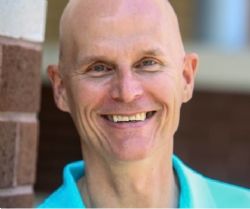
Do you feel like God is stretching you right now? You're praying for answers to challenging problems, but the silence feels deafening. The tension—maybe in your heart, in your relationships, or in your daily walk. Feeling stretched by God can make you wonder – "Why do I feel this way in this season? I've been there before. As a former coach and health teacher passionate about longevity (body, mind, emotions, spirit, relationships), I know stretching rarely feels comfortable at first. But when God is stretching you this season, it's not to break you—it's to make room for more of His goodness, freedom, and purpose in your life.

Recently, as I was preparing to speak at Capps Chapel, the Holy Spirit prompted me that there was someone listening who had been attacked by a spirit of fear and that I should minister to them. It was a very strong impression, so I asked that person to respond. God wanted them delivered! Fear is not from God! No one responded, so I prayed a general prayer. Later, I discovered that someone was present who was gripped by fear but did not respond! Fear prevented this person from responding.
This page does not exist.