
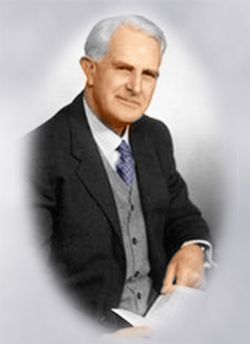
Herman P. Aschmann, translator of three versions of the Totonac New Testament in Mexico has died at the age of 94 LONGMONT, COLORADO (ANS) -- Herman P. Aschmann, translator of three versions of the Totonac New Testament for the Totonac Indians in the highlands of Mexico, died on February 18th - his 94th birthday -- at the Life Care Center in Longmont, Colorado, due to complications from pneumonia. Herman Aschmann His contribution to the work of the Summer Institute of Linguistics (SIL) has been remembered by Dr. Dale W. Kietzman, president of Latin American Indian Ministries (LAIM), and the former US director of Wycliffe Bible Translators. In an interview with ANS, Dr. Kietzman said, "Herman Aschmann first went to the Totonacs in the nineteen-forties and he started in a small town where there was no place for him to stay. There was no hotel there, so he had to live in the jail while he was there. "He began working with a teenage boy to start his first translation, but unfortunately died because he fell out of the corn field. Their fields there are so steep that they actually have to tie themselves into some of the slopes as they are working their corn and he unfortunately slipped and fell and was killed. "So his next choice was another young man, Manuel Arenas, who eventually came to the Lord and became an outstanding person, who went to through high school in just a matter of a couple of years and then he went to Canada first to learn English and then went through school at the University of Chicago here in the United States. He was then given a scholarship to Germany because he learned German so well and he earned a Masters Degree in Education from a university there. "But his determination was to go back and start a school for his own people and that became the Totonac Bible Center. He trained scores of current leaders in the tribe who are now pastors." Sadly, Manuel Arenas passed away some eight years ago and so Dr. Kietzman is continuing his work, but has extended it to other Indian tribes in Latin America. (See www.laim.org.) Dan Wooding with Dr. Dale Kietzman "In his lifetime, he translated three different New Testaments in three different Totonac languages and they've all been published and distributed now to the people for whom he translated," he said. "He was one of the great unsung heroes of Bible translation in that part of the world." Herman's son, Dan, also spoke warmly about his father. "I most remember my father as a man of intense commitment to the cause of getting the Word of God into the hands of tribal people," he said. "As the result of his work in translation and investing his life in a few brilliant Totonac Indian men, there are now over 50 self-sufficient, reproducing Totonac churches in the mountains and coastal region of eastern Mexico. "He was a humble man who related easily to the Totonac Indians. They saw in my father a man who was completely transparent and caring. He once told me that the reason he had experienced such success among the Indians was because God had given him the ability to make friends easily and quickly. He was known as a steady plodder who, through unbearable difficulties, continued to work at Bible translation into his 90's. He finally quit only when he could no longer see well due to macular degeneration." Herman Aschmann once wrote about discovering Manuel Arenas in these words and began be referring to the young man who had died: Manuel Arenas Manuel's background as a Totonac Indian "Manuel was also dissatisfied with the direction his own personal life was heading. He wanted to be a truly good person but found it hard to be one. He also thought much about the spirit world. He just wasn't satisfied with the Totonac notions and beliefs about what was out there. So he sort of just settled for being an intelligent skeptic with a lot of unanswered questions and doubts about his fellow Totonac Indian animistic beliefs and practices. Some of these were even connected with the trappings of the RC church. It is interesting to see how the Totonacs have borrowed some of the symbolism, like praying to the statue of a saint so that it will do things for them. It sort of fit their own taboos and dealings with the spirit owners of things in nature which they feel they can manipulate. There is an ancient yet magnificent little RC church in Zapotitlan. This is true of most of the little towns around there. Historians tell us that the Totonac Indians, four centuries ago, had helped Hernan Cortes in his conquest of Mexico. "After he had succeeded in doing that, the Totonac Indians were one of the first Indian groups in Mexico to be systematically evangelized by the monks that followed the conquerors. They built a monastery in Zapotitlan to do that. It seems that before the conquest of Mexico the Totonacs lived more in the fields they cultivated than in towns. The monks to evangelize them better persuaded or forced them to live in villages. There, with Indian help, they built some truly monumental little stone churches in every village. What those monks were never fully able to control or erase were their animistic notions and taboos. Just about everything they saw in nature had a spirit owner. To these spirit beings the Totonacs just added the statues of the R.C. saints. To them those statues had something alive or magical about them that could be manipulated or appeased just like they could with the spirit owners of things in nature. The greatest leap in faith we saw some of those Totonacs take, was to begin to trust in someone out there whom the y couldn't see, touch or somehow symbolize in a material way. To think of someone who is everywhere as well as right next to us is just too mysterious and inaccessible for many of them to try to deal with. "Giving them the printed Bible in their language gives them access to that invisible Creator God. Although he cannot be felt or seen, the Bible wants them to know he is real by what he thinks about them and what he wants to do for them. The thing he wants to do most for them is to show them that he loves them and wants to forgive them if they will only ask him to. To prove it, he let Christ his son die on the cross so that he could take the punishment that they deserve. He is not only a loving God but one who is good in every way. He makes no irrational demands upon us. Nor is he capricious like the spirit beings whom they believe in. He is true goodness and wants to change their lives so that they might become His kind of truly good person. "In a way you could say that one of Manuel's greatest unanswered questions had to do with that Creator God. Most Totonacs don't bother with him. They feel that after he finished his creation he left it to fend for itself. Somehow Manuel felt that he must still be around. But if so, what was he like? Manuel also wanted to be a moral person with good ideas about right and wrong. But who was there to inform him about what was the creator God's view of what was right and what was not? He was also very dissatisfied with the lives of those around him. Many Totonacs were alcoholics. There was much feuding and vengeance going on among them. Manuel's conversion experience "Right from the start Manuel kept on coming every day to study with me. First it was helping supply me with new words for the Spanish-Totonac dictionary we were compiling. I introduced him to a Spanish Bible and told him some of what was in it. I told him of our desire to translate the New Testament part of that book into Totonac and asked him if he would like to help us do that. He liked the idea. As a starter we tried our hand at translating some key verses that spoke clearly of God's offer of forgiveness and salvation through Christ. As I guided Manuel in his search for a meaningful translation of those individual verses he began to realize how they applied to him personally. That gave him a hunger to keep on translating. He even promised me that he would stick at it with me until we finished the translation of the whole New Testament into Totonac. So, with Manuel as translator and me as his consultant, we kept at it for twelve long years until we finished and had the Highland Totonac New Testament ready for printing. Manuel's commitment to translate "Manuel knew that coming every day to study with me instead of not going to work each day with his father would mean trouble. It soon came to a head when his father threw all of Manuel's belongings out on the street. Manuel picked them up and came to live with us. He kept visiting his mother but only went to see her when his father was not at home. "What Manuel lacked in preparation for the task of translating the Bible was made up by his utter dedication. He has told us that he wanted to quit more than once, but couldn't. God wouldn't let him! He also never would take any pay for all the sacrifices he made to finish that New Testament translation with me." He then spoke about Felipe Ramos, who is continuing the work of Manuel Arenas amongst the Totonacs: "It was somewhere in the early 1950s that someone came to see me early one morning. It was Severo Ramos the tallest man in Nanacatlan. He had a smile from ear to ear; he wanted to tell me that he had decided to follow Christ. Mariano Luna had persuaded him to become a believer. Severo was the father of Felipe Ramos who later went for a year to Dr. Dale's Bible School in Tamazunchale. After that he studied a year at the Central American Mission's Seminary in Puebla. With Mariano and Severo as their elders, an organized church had its beginning in Nanacatlan. Mariano built a little thatch-roofed chapel beside his house. That is where we met for services with the believers for most of the years we were there. Services at our house and Felipe's call "As the years went by we noticed that most of those who came to the services in the little chapel next to Mariano's house were related to each other. That all changed when Carlos Acosta, another of Dr. Dale's evangelists, came to visit us. There were so many who wanted to hear what he had to say that we had to open our house as the place for that. Opening our house brought in many people who weren't related to Mariano or Severo. When Carlos Acosta left we had a problem as everyone wanted to keep coming to our house to hold services. It was in one of the services at our house that Felipe Ramos started to take the children aside and teach them separately. He felt so comfortable and fulfilled doing this that he then wanted to go to the Bible School in Tamazunchale to study the Bible in Spanish. He went there for a year and then went to study for another year at the Central American Seminary in the city of Puebla. He then returned to become the pastor of the church in Nanacatlan. Under his leadership the believers built a new church building. The cooperation of all those interested in its building broke up the clan spirit and made everyone feel more comfortable to meet together, even those who were not related. "Later in 1960 we had to take Felipe to Mexico to see a doctor because of his constant coughing. The doctor found that he had TB and thankfully we were able to put him into the TB hospital just a few blocks away from our new headquarters in Tlalpan. After two years of treatment, he was pronounced cured and returned home to continue on as the pastor of the church in Nanacatlan. Later he went to La Union to help Manuel Arenas start to build and start classes at his Bible School. After Manuel died, Felipe returned to Nanacatlan where he is now ministering to his people as well as teaching some of the young Totonac men of the area who also want to become pastors and establish new churches of their own in the surrounding villages." On the Translations: 1954 The Highland Totonac New Testament translation is finished and handed in for printing. It finally comes off the press in 1959. What a legacy that Herman Aschmann has left behind him. He will be sorely missed by his many friends and, most of all, by the many Totonacs who found Christ because of his unswerving patient work of Bible translation.
He began his ministry living in a jail
By Dan Wooding
Founder of ASSIST Ministries 
Dr. Kietzman then praised the legacy that Hermann Aschmann has left among the Totonac people. 
"Yet God made good come out of it," he said. "Because of his death who should now show up at our house but another young Totonac teenager living a block away from us. His name was Manuel Arenas. He now wanted to be our teacher. He came to offer his help primarily because he was curious and wanted to know more about the outside world. He had gone to the town school for three years as many other Totonacs did and knew how to read and write in Spanish. Outside of school, however, he spoke mostly Totonac. He had to work daily with his father and brother in their fields. He knew we had books in Spanish and he thought that maybe we foreigners could help him get a better glimpse of the outside world. 
(Photo: Dan Wooding)
1978 Papantla Totonac New Testament translation is finished and printed.
1986 The Coyutla Totonac New Testament translation is finally translated and printed.
1996 With Felipe Ramos' help the final draft of the Highland Totonac New Testament revision is finished and comes off the press in 2000 Dan Wooding, 67, is an award winning British journalist now living in Southern California with his wife Norma of 44 years. He is the founder and international director of ASSIST (Aid to Special Saints in Strategic Times) and the ASSIST News Service (ANS). He was, for ten years, a commentator, on the UPI Radio Network in Washington, DC. Wooding is the author of some 42 books, the latest of which is his autobiography, "From Tabloid to Truth", which is published by Theatron Books. To order a copy, go to www.fromtabloidtotruth.com. danjuma1@aol.com. 
Herman P. Aschmann, translator of three versions of the Totonac New Testament in Mexico has died at the age of 94
Related Articles • More Articles

"For I will be merciful to their unrighteousness, and their sins and their lawless deeds I will remember no more." Hebrews 8:12 When something goes wrong, is your first thought, "Well, this must be happening to me because of the sins that I have committed"? When you have a flat tire or fall sick, do you wonder, "What sin is God punishing me for now?" If your answer to both questions is "yes," you are not alone. This kind of thinking is so prevalent in the church because many believers don't really believe that they are under the new covenant. They believe the opposite of today's Scripture and think God is not merciful to their mistakes and always mindful of their sins.
The anointing you received from Him remains in you, and you do not need anyone to teach you. But as His anointing teaches you about all things and as that anointing is real, not counterfeit – just as it has taught you, remain in Him. (1 John 2:27 NIV) The School of Christ; that is, the School where Christ is the great Lesson and the Spirit the great Teacher; in the School where the teaching is not objective, but subjective; where the teaching is not of things, but an inward making of Christ a part of us by experience – that is the nature of this School.

I want to share a word that the Lord gave me some time ago. It was about the countless women who have been called to powerful ministries, making a significant impact in Gods kingdom. Most of these women endured immense pain and affliction in their lives, yet they remained strong and steadfast in their faith, and unwavering in their devotion to Jesus. Katherine Kuhlman once said: "The anointing will cost you everything, but it's worth it"